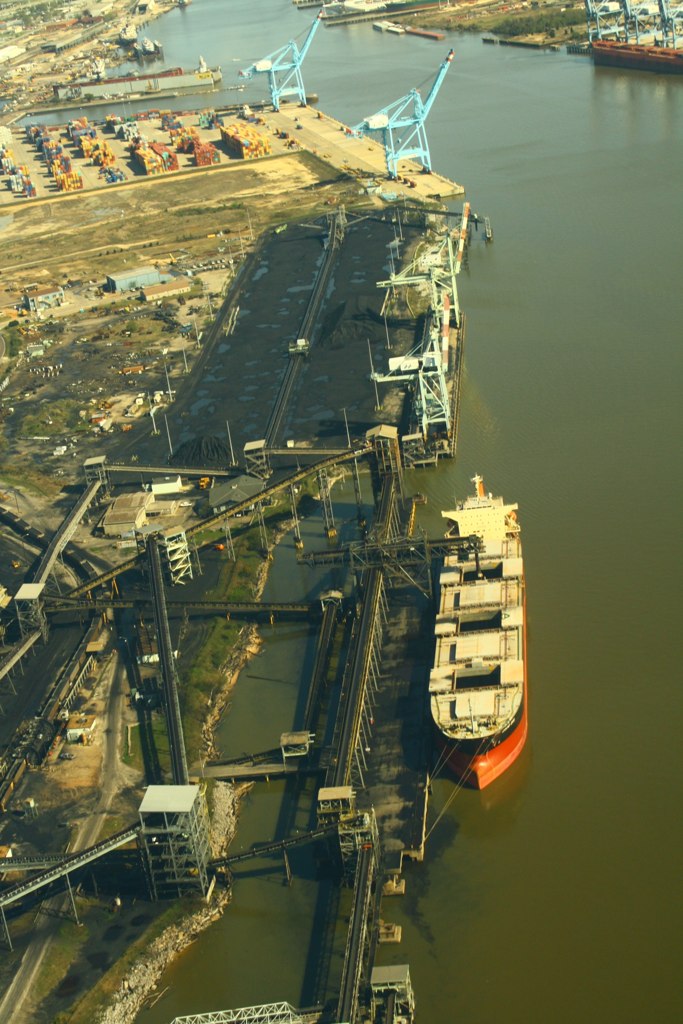
Coal is often discussed as a single commodity, but in reality it is part of one of the world’s most complex industrial supply chains. Every tonne burned in a power plant represents a coordinated effort involving mining companies, railroads, ports, shipping companies, traders, laboratories, insurers, financial institutions, and utility operators. Understanding this supply chain helps explain why coal remains a critical component of the global energy system despite rapid changes in the broader energy landscape.
More Than Just Mining
The journey begins at the mine, but that is only the first step. Coal quality can vary significantly depending on its origin, with characteristics such as calorific value, moisture, ash content, sulfur, volatile matter, and grindability influencing where and how it can be used. Utilities carefully evaluate these specifications because even small variations can affect boiler performance, emissions, maintenance requirements, and overall operating costs.
Before a shipment is ever loaded onto a vessel, extensive testing and quality verification are typically performed. Independent inspection companies often sample cargoes to verify that contractual specifications are met, providing confidence to both buyers and sellers.
The Logistics Behind Every Shipment
Moving millions of tonnes of coal across continents requires an enormous logistics network.
After leaving the mine, coal may travel hundreds of miles by rail or barge before reaching an export terminal. There it is stockpiled, blended when necessary, reclaimed, and loaded onto ocean-going vessels. Timing is critical. Delays at any stage—from rail congestion to adverse weather at port—can ripple throughout the supply chain and affect power generators thousands of miles away.
Ocean transportation introduces another layer of complexity. Vessel availability, freight rates, canal traffic, port congestion, weather conditions, and geopolitical events all influence delivered fuel costs. For large utility customers purchasing millions of tonnes annually, even modest changes in freight rates can have a meaningful impact on fuel budgets.
Trading Adds Flexibility
International coal trading performs an important economic function by connecting producers with consumers across multiple regions.
A utility in Europe may source coal from Colombia one month and from the United States or Indonesia the next, depending on market conditions, freight economics, fuel specifications, and operational requirements. Traders help manage these relationships by matching buyers and sellers, coordinating logistics, mitigating commercial risks, and maintaining supply continuity when markets change unexpectedly.
This flexibility has become increasingly valuable in recent years as geopolitical events, sanctions, weather disruptions, and transportation constraints have periodically reshaped global trade flows.
Fuel Security Is Energy Security
Recent events have reminded governments and utilities that reliable electricity begins with reliable fuel supply.
Power plants generally cannot generate electricity without dependable access to fuel inventories. While renewable energy continues to expand worldwide, dispatchable generation remains essential for maintaining grid stability during periods of peak demand or when weather-dependent resources are unavailable.
For countries that rely on imported fuels, diversification of supply has become an increasingly important strategy. Maintaining relationships with multiple producing regions, transportation providers, and commercial partners helps reduce exposure to disruptions in any single market.
The lesson is straightforward: energy security depends not only on generation capacity but also on resilient supply chains.
Quality Matters Every Step of the Way
Coal is frequently viewed as a uniform commodity, yet experienced operators understand that consistency is often as important as price.
Power plants are designed around specific fuel characteristics. Unexpected variations can reduce efficiency, increase maintenance costs, or require operational adjustments. As a result, buyers pay close attention not only to laboratory specifications but also to the reliability and reputation of suppliers throughout the supply chain.
This emphasis on quality control extends from mining operations to loading terminals, shipping documentation, sampling procedures, and final delivery.
A Changing Industry
The global energy sector is evolving rapidly. Natural gas, renewable generation, battery storage, engineered fuels, and emerging technologies are all reshaping electricity markets. At the same time, demand for reliable, dispatchable power continues to grow in many parts of the world, driven by industrial development, electrification, and increasingly by the expansion of data centers and artificial intelligence infrastructure.
Regardless of how generation technologies evolve, the need for secure, efficient, and well-managed fuel supply chains will remain. The experience developed over decades in international fuel trading—managing logistics, understanding market dynamics, evaluating quality, and mitigating commercial risk—continues to provide valuable lessons for the broader energy industry.
Coal may represent only one part of today’s increasingly diverse energy mix, but the systems developed to move it efficiently around the world demonstrate what resilient industrial supply chains require: careful planning, trusted commercial relationships, technical expertise, and the ability to adapt as markets evolve.
Further Reading
- International Energy Agency — Annual reports on global coal markets and electricity systems.
- World Coal Association — Technical information on coal production, transportation, and power generation.
- U.S. Energy Information Administration — Data and analysis on international energy markets and fuel supply chains.
Further Reading
- International Energy Agency (IEA) – Coal 2025 Report
The IEA’s flagship annual report covering global coal demand, production, trade, prices, and forecasts through 2030. https://www.iea.org/reports/coal-2025 - International Energy Agency – Coal Overview
Background information, market trends, and global coal statistics from the IEA. https://www.iea.org/energy-system/fossil-fuels/coal - U.S. Energy Information Administration (EIA) – Coal Explained
An excellent overview of coal types, production, transportation, and use. https://www.eia.gov/energyexplained/coal/ - U.S. Energy Information Administration – Coal Data & Statistics
Comprehensive data on coal production, exports, imports, prices, reserves, and consumption. https://www.eia.gov/coal/ - FutureCoal (formerly the World Coal Association)
Industry perspectives on coal markets, technology, sustainability, and the global coal value chain. https://www.futurecoal.org/coal-facts/
About the Author
Emmanuel Merle is an international energy executive with more than 50 years of experience in global fuel markets, coal trading, and energy infrastructure. He serves as Managing Director of Comptoir Balland-Brugneaux (CBB), one of the world’s long-established international coal trading companies, and has spent his career developing fuel supply chains and commercial relationships across Europe, Asia, North America, and Africa. Through PowerGen Insights, he writes about global fuel markets, energy security, international trade, and the evolving role of fuels in modern power generation.